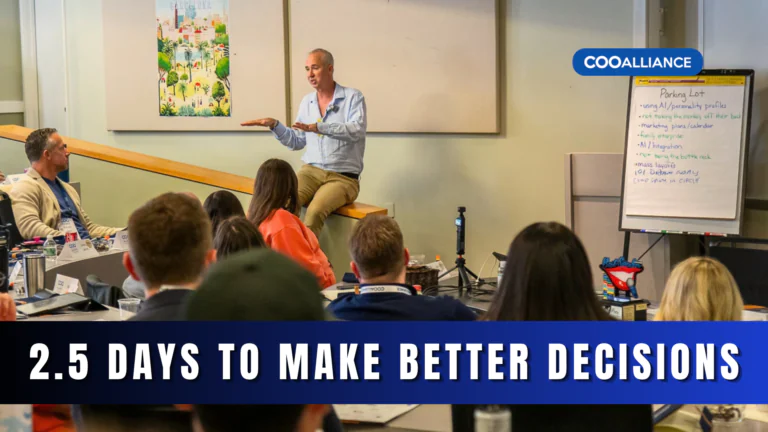
You hired a COO to take work off your plate, and now the plan says to wait a month before anything changes.
That is the hardest part of the first 30 days, and the owner usually feels it first, not the COO. Cameron Herold’s advice is to let a new COO change nothing at first: no hiring and no new projects.
Why The First Month Feels So Long
The new COO wants to prove the hire was the right call, and the owner wants results. So both feel pressure to move fast. A new leader who changes things in week two, however, is deciding from the org chart before learning how work moves through the company.
At 1-800-GOT-JUNK? the team spent six weeks onboarding a marketing coordinator. She completed franchise training, worked in the call center, and met managers across the company before starting the job. If a company invests that much in a coordinator, rushing a COO into decisions that affect everyone makes little sense.
A 90-Day Plan
Cameron Herold splits the first 90 days into three phases:
- Days 1 to 30: learn the company, meet the people, and write ideas down without acting on them
- Days 31 to 60: test those ideas, ask questions, and find out what the company has already tried
- Days 61 to 90: deliver quick wins that do not need many people, much time, or much money
A COO who understands the business and has earned the team’s trust is in a much stronger position to lead change.
Bottom Line
A new COO who spends the first month learning gives the owner more in the end, because every later change rests on how the company runs.
At day 90, the owner and the COO can review progress with the CEO’s COO Scorecard, which benchmarks a COO’s leadership skills against 600 other COOs in about 10 minutes: take the scorecard.